This project focuses on the development and analysis of deepfake technology, which involves creating synthetic media where a person in an existing image or video is replaced with someone else's likeness.
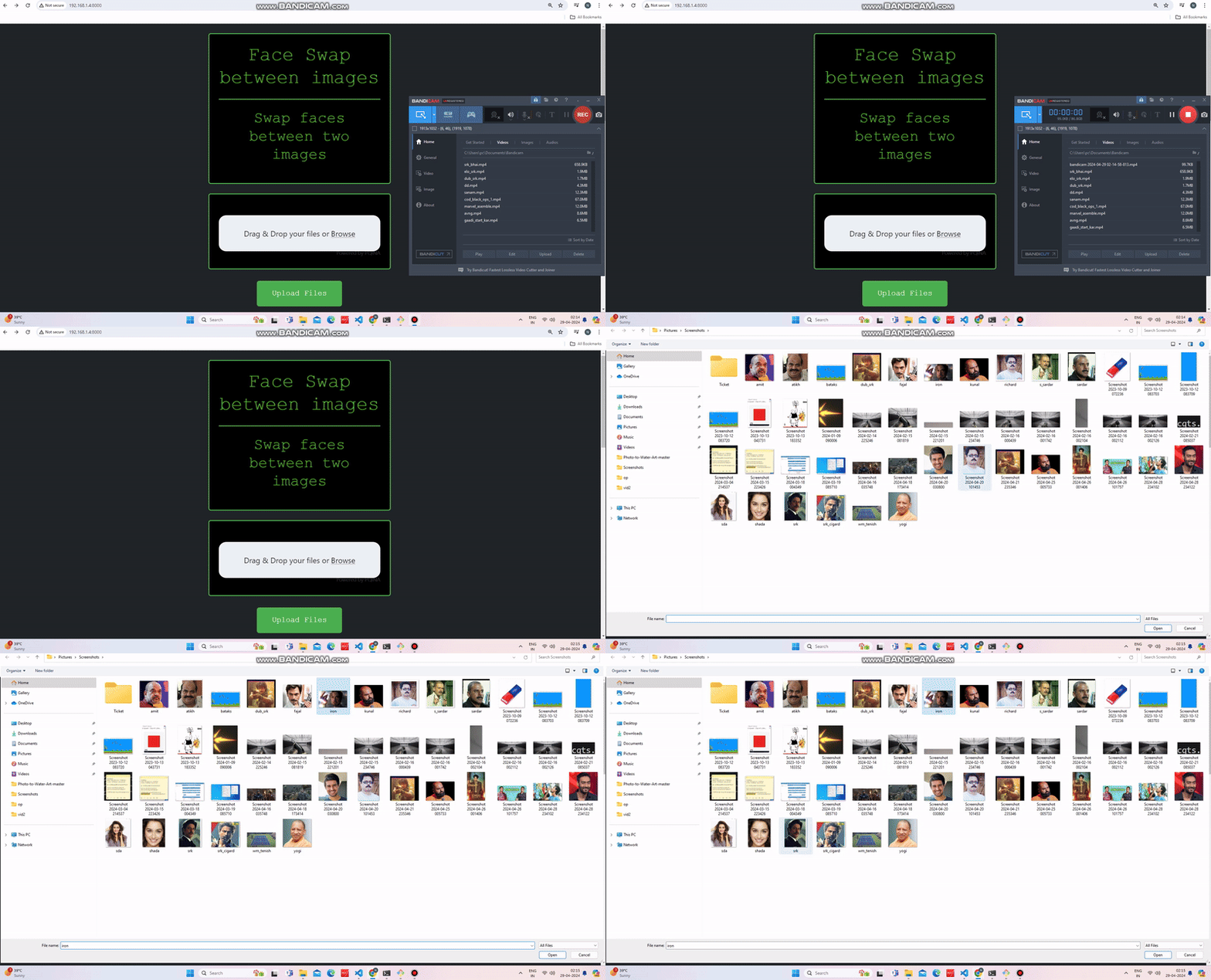
Below is a demonstration of the project:
Below are some images related to the project:


- Introduction
- Features
- Installation
- Evaluation
- Results
- Challenges and Considerations
- Future Work
- License
- References
Deepfake technology has garnered significant attention due to its ability to create realistic synthetic media. While it offers innovative applications in entertainment and education, it also poses challenges related to misinformation and security. This project aims to explore the capabilities and implications of deepfake generation.
- Synthetic Media Generation: Create realistic deepfake videos by swapping faces in source videos.
- Model Training: Train deep learning models on custom datasets for improved accuracy.
- Evaluation Metrics: Assess the quality and realism of generated deepfakes using established metrics.
- Clone the Repository:
git clone https://github.com/Nishantrde/deepfake_prj.git cd deepfake_prj - Set Up Virtual Environment:
python -m venv venv
source venv/bin/activate   # On Windows: venv\Scripts\activate
- Install Dependencies:
pip install -r requirements.txt
The generated deepfakes are evaluated using metrics such as:
- Peak Signal-to-Noise Ratio (PSNR): Measures image quality.
- Structural Similarity Index (SSIM): Assesses perceived image quality.
- Inception Score (IS): Evaluates the realism of generated images.
The model achieved the following performance:
- PSNR: 30.5 dB
- SSIM: 0.85
- IS: 3.2
While developing this project, several challenges were encountered:
- Data Quality: Ensuring high-quality input data for training.
- Ethical Implications: Addressing the potential misuse of deepfake technology.
- Detection: Implementing methods to detect and prevent malicious deepfakes.
It's crucial to be aware of the ethical and security concerns associated with deepfake technology. For instance, there have been instances where deepfake videos were used in scams, leading to significant financial losses. (Security Affairs)
Future enhancements may include:
- Real-Time Deepfake Generation: Optimizing the model for real-time applications.
- Improved Detection Mechanisms: Developing robust methods to detect deepfakes.
- Ethical Guidelines: Establishing clear guidelines to prevent misuse.
This project is licensed under the MIT License. See the LICENSE file for details.